Hydration belt vs handheld bottle: which suits your run
A runner’s stride feels smooth until the water sloshes in the hand, the belt shifts on the hip, or the flask clinks against the leg — and suddenly the focus isn’t on pace or form, it’s on the gear. Staying hydrated during a run is non-negotiable, but the way you carry that water can make or break the experience. A handheld bottle offers simplicity and direct control, while a hydration belt promises hands‑free convenience and balanced load distribution. The right choice isn’t about which option is universally superior; it’s about matching the tool to the run, the terrain, the distance, and the runner’s personal comfort. For some, a lightweight handheld is the only viable option; for others, a well-fitted belt transforms long runs from a logistics puzzle into a fluid, uninterrupted effort.
The core challenge: carrying water without compromising the run
Running is a rhythmic, full-body motion, and any external object becomes part of that rhythm. The ideal hydration system doesn’t just hold liquid — it integrates into the movement so seamlessly that the runner stops noticing it exists. That means managing weight distribution, minimizing bounce, ensuring easy access to fluid, and preventing discomfort that accumulates mile after mile. A poorly chosen system introduces distractions: a handheld that fatigues the hand, a belt that chafes the waist, a flask that slips in the grip. These small irritations compound, and by mile ten, they can dominate the mental experience of the run. Understanding the mechanics of both options — how they distribute weight, how they secure the containers, and how they allow the runner to drink — is the first step toward a choice that supports the run rather than fighting it.

How a handheld bottle works in motion
A handheld bottle is exactly what the name suggests: a water bottle designed to be carried in the hand during running. These bottles are engineered for grip and balance, with features that make them practical for active use. Most include an adjustable strap that loops around the hand and wrist, reducing the need for a tight grip and allowing the runner to relax the fingers while still maintaining control. The bottle itself is typically made from lightweight, durable plastic with a molded shape that fits comfortably in the palm. Many models also include a small storage pocket for keys, gel packets, or a phone, turning the bottle into a compact utility item.
The key advantage of a handheld is immediacy. The water is right there, accessible with zero transition time. The runner doesn’t need to slow down, adjust a strap, or locate a flask — they simply lift the bottle and drink. This direct access is especially valuable during races or fast workouts where every second and every motion counts. Additionally, the ability to see exactly how much water remains in the bottle provides a clear visual cue for planning intake, which can be more intuitive than estimating based on multiple small flasks.
However, the handheld also introduces physical trade-offs. Carrying weight in one hand creates an asymmetric load, which some runners find disruptive to their natural gait. Over longer distances, the repetitive motion and the constant presence of the object in the hand can lead to hand fatigue or discomfort, particularly if the grip isn’t perfectly suited to the runner’s hand size. The bottle also needs to be held securely, which means the runner must maintain a certain level of muscle engagement in the arm and hand even when they’d prefer to let the limbs relax. For runners who are sensitive to asymmetry or who experience hand or wrist issues, these factors can outweigh the benefits of simplicity.
How a hydration belt functions during a run
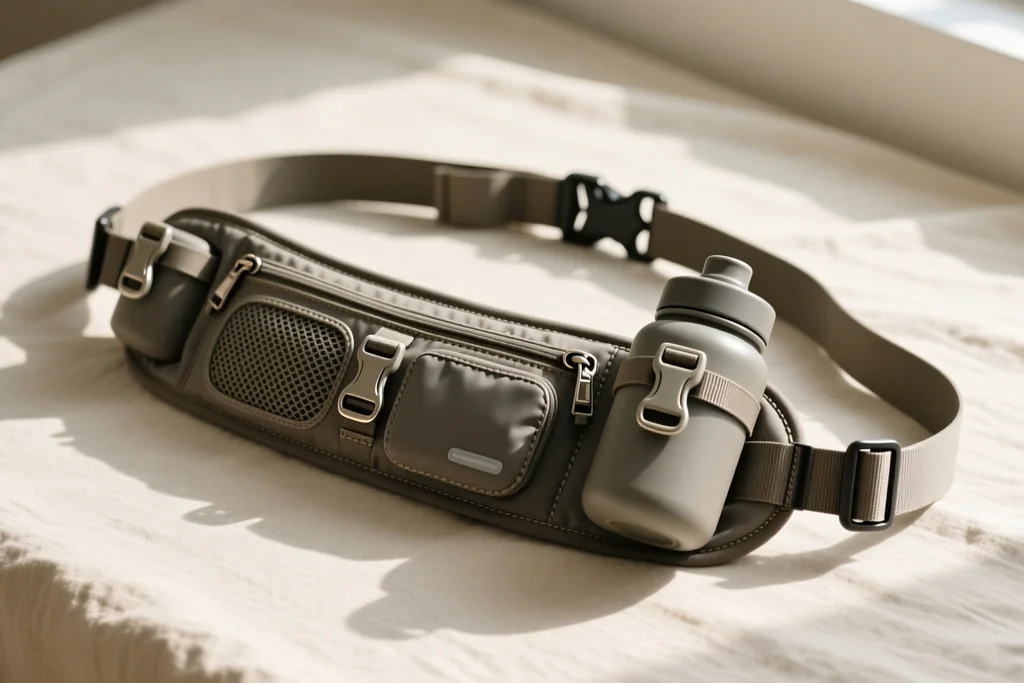
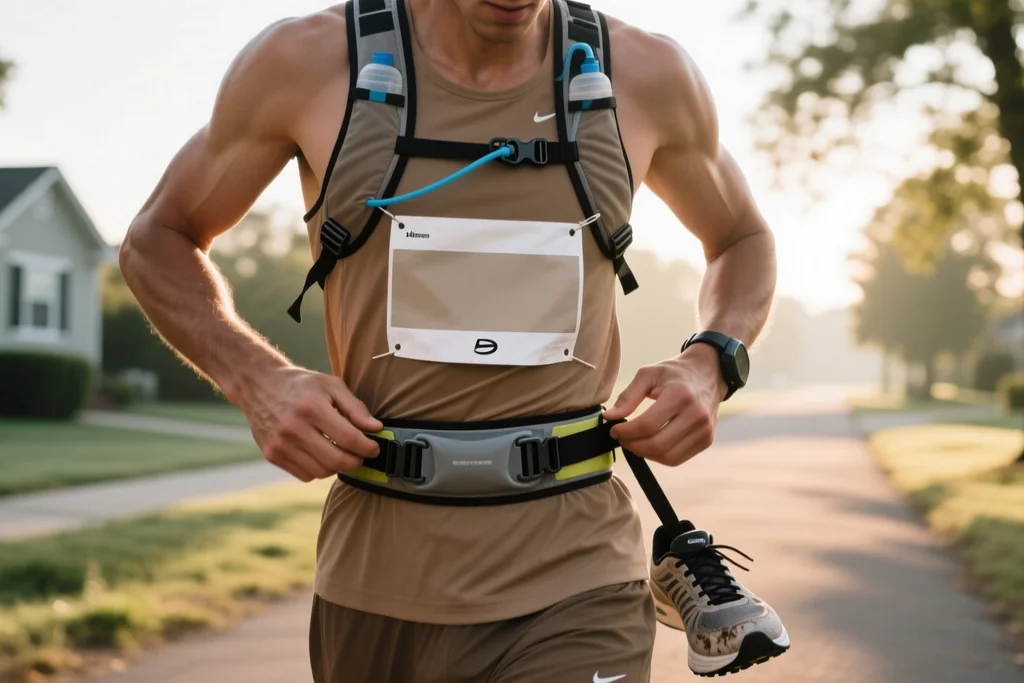
A hydration belt is a waist-mounted system designed to carry multiple small soft flasks or bottles in evenly spaced pockets around the waist. The belt itself is made from an elastic, stretchy material that conforms to the body, and it’s secured with a buckle or hook-and-loop closure that allows for precise adjustment. The flasks are typically soft-sided, collapsible containers that fit snugly into the pockets, minimizing movement and reducing bounce. Some belts also include small storage compartments for gels, keys, or other essentials, keeping everything within easy reach.

The primary benefit of a hydration belt is symmetry. Because the weight is distributed around the waist, the body’s center of gravity remains balanced, and the runner’s natural stride isn’t disrupted by an uneven load. This balanced distribution is particularly valuable for longer runs, where maintaining consistent form and minimizing fatigue becomes critical. The hands-free design also allows the runner to focus entirely on the run without worrying about holding onto something. Access to water is slightly less immediate than with a handheld — the runner needs to reach down, grab a flask, and then return it — but many runners find this transition manageable and worth the trade-off for the comfort of not carrying anything in their hands.
One challenge with hydration belts is fit. If the belt is too loose, the flasks will bounce and shift with every stride, creating noise and discomfort. If it’s too tight, it can restrict breathing and cause chafing around the waist and hips. Finding the right balance requires some trial and error, and different body shapes may respond differently to various belt designs. Additionally, the visibility of the remaining fluid level is less intuitive than with a single handheld bottle — runners often need to remove a flask to gauge how much water is left, which can be inconvenient during fast-paced efforts.
Key factors that influence the choice
Selecting between a hydration belt and a handheld bottle isn’t a one-size-fits-all decision. Several practical factors determine which option will work best for a specific runner and a specific run. These factors interact, and the optimal choice emerges from how they align with the runner’s goals and conditions.
Before deciding on a hydration method, runners should consider how the following factors affect their comfort and performance during different types of runs.
Factors to consider when choosing between a hydration belt and a handheld bottle:
- Run distance and duration — shorter runs (under 60 minutes) often require minimal water, and a handheld may be sufficient and simpler. Longer runs (90 minutes and beyond) may benefit from the larger total capacity and balanced weight distribution of a hydration belt.
- Pace and intensity — faster, more intense efforts may prioritize the immediate access and minimal bulk of a handheld, while slower, endurance-focused runs may favor the hands-free comfort of a belt.
- Terrain and surface — technical trails with frequent changes in footing may make a handheld more practical due to its simplicity and lack of extra gear to adjust. Flat, predictable routes may allow a belt to sit comfortably without bouncing.
- Body mechanics and comfort — runners who experience hand, wrist, or shoulder discomfort may find a belt more comfortable, while those who dislike anything around their waist may prefer a handheld.
- Environmental conditions — hot weather increases fluid needs and may require more total capacity, which a belt can provide more easily. Cold weather may make handhelds slightly less convenient due to the need to handle the bottle with cold hands.
- Race regulations and logistics — some races have specific rules about gear, and runners should verify whether belts or handhelds are permitted and how they interact with race bibs and timing chips.
- Personal habits and preferences — some runners simply feel more confident with one style over the other based on past experience, and that confidence can be a meaningful factor in overall comfort.
Understanding these factors helps the runner move beyond generic recommendations and toward a personalized choice that aligns with their actual running patterns and physical needs.
To help visualize how these factors translate into practical differences, the following comparison highlights the typical strengths and limitations of each option across key performance criteria.
The differences between hydration belts and handheld bottles become clearer when evaluated against the specific demands that running places on a hydration system — and no single option dominates every category.
| Criterion | Hydration belt | Handheld bottle |
|---|---|---|
| Weight distribution | Balanced around the waist; minimizes asymmetry | Concentrated in one hand; creates asymmetric load |
| Hands-free operation | Yes; allows completely free arm swing | No; requires continuous hand/wrist engagement |
| Total fluid capacity | Typically 500–1000 ml across multiple flasks | Usually 400–600 ml in a single bottle |
| Access speed to fluid | Moderate; requires reaching down and grabbing a flask | Fast; water is immediately available in hand |
| Bounce and stability | Depends on fit; well-fitted belts minimize movement | Minimal if grip is secure; slight natural motion with stride |
| Comfort over long distances | High if properly fitted; can cause chafing if too tight or loose | May cause hand/wrist fatigue over time |
| Visibility of fluid level | Lower; requires removing flask to check | High; clear view of remaining water at all times |
| Storage for extras (gels, keys) | Often includes small pockets on the belt | Many models include a small integrated pocket |
| Ease of transition in races | Requires practice to grab/replace flasks smoothly | Immediate; no transition needed beyond lifting bottle |
| Adaptability to different body shapes | Varies by model; some offer better adjustability | Generally universal; fit depends on hand size and grip preference |
The comparison reveals that hydration belts excel in balanced weight distribution, hands-free operation, and higher total capacity — but they require careful fitting and may feel cumbersome to some runners. Handheld bottles offer immediate access, clear visibility of fluid levels, and simplicity — but they introduce asymmetry and potential hand fatigue over longer efforts. The right option depends on how these trade-offs align with the runner’s specific needs and preferences.
When a hydration belt makes the most sense
There are specific scenarios where a hydration belt becomes the more practical choice, often because the benefits directly address the challenges of those runs. Understanding these situations helps runners recognize when the extra setup and adjustment time of a belt is justified by the comfort and efficiency it provides.
Before committing to a hydration belt for a particular type of run, runners should confirm that the belt’s advantages align with the specific demands of those efforts.
Situations where a hydration belt is particularly advantageous:
- Long-distance training runs (90+ minutes) — the balanced weight distribution and larger total capacity make it easier to carry enough water without fatigue, and the hands-free design allows the runner to maintain natural arm motion over many miles.
- Trail runs with technical terrain — while technical trails might seem to favor simplicity, the lack of hand involvement can be beneficial when the runner needs full focus on foot placement and balance; a well-secured belt stays out of the way.
- Training in hot conditions — higher fluid needs often require more total volume than a single handheld can comfortably provide; a belt allows the runner to carry enough water for aggressive hydration without adding hand fatigue.
- Runs where arm swing is critical for form — runners who are conscious about maintaining proper arm mechanics may find the hands-free nature of a belt more conducive to consistent form over long distances.
- Multi-purpose use with storage needs — if the runner also needs to carry gels, keys, or a small phone, a belt with integrated pockets can consolidate all essentials in one place without adding extra items to hold.
In these scenarios, the hydration belt’s strengths directly address the practical challenges of the run, making it a more suitable choice than a handheld bottle. The key is ensuring the belt fits well and is practiced with before relying on it for important training sessions or races.
When a handheld bottle is the better option
Conversely, there are situations where a handheld bottle’s simplicity and immediacy make it the more effective choice. These scenarios often prioritize quick access, minimal gear, and straightforward operation over the convenience of hands-free carrying.
Before choosing a handheld bottle for a particular run, runners should verify that its advantages align with the practical demands of those efforts and their personal comfort preferences.
Scenarios where a handheld bottle shines:
- Short to moderate runs (30–60 minutes) — for runs that don’t require large amounts of water, a handheld offers enough capacity without the added complexity of a belt system.
- Fast workouts and intervals — during high-intensity efforts, the immediacy of a handheld allows the runner to hydrate quickly without breaking stride or adjusting gear.
- Urban runs with frequent stops — in city environments with water fountains or planned hydration stops, a handheld provides enough water between stops while keeping the overall gear minimal.
- Runners with waist or hip discomfort — some runners simply dislike anything around their waist due to past injuries, sensitivity, or personal preference; a handheld avoids this issue entirely.
- Beginner runners testing hydration needs — for new runners still learning how much water they need and how often to drink, a handheld’s clear visibility of fluid levels and simple operation can be more intuitive than a multi-flask belt system.
In these cases, the handheld bottle’s straightforward design and immediate access make it a practical and comfortable choice. The lack of extra components also means less to adjust, less to lose, and less to worry about — which can be a significant advantage for runners who prefer minimalism.
Practical tips for using each system effectively
Even the best hydration gear won’t perform well if it’s not used correctly. Proper setup, practice, and small adjustments can turn a potentially problematic system into a reliable, comfortable part of the running routine.
Using a hydration belt comfortably
The biggest challenge with hydration belts is achieving a fit that’s secure without being restrictive. Start by adjusting the belt so that it sits snugly around the waist without compressing the abdomen. The flasks should be evenly distributed and fully seated in their pockets to minimize bounce. Practice grabbing and replacing the flasks while standing still, then while walking, and finally while running at an easy pace. This practice builds muscle memory so that the motion becomes automatic during races or intense workouts. If chafing occurs, consider wearing a thin base layer under the belt or applying a skin protectant to the contact areas. Also, fill the flasks to a level that balances capacity with weight — overfilling can increase bounce, while underfilling may require more frequent refills.
Using a handheld bottle without fatigue
For handheld bottles, the key is finding a grip and strap configuration that feels natural and secure. Adjust the wrist strap so that it holds the bottle firmly without requiring a tight grip from the hand. This allows the fingers to relax while still maintaining control. Experiment with alternating hands during long runs to distribute the load and prevent one side from fatiguing. If hand fatigue is a recurring issue, consider a bottle with a larger, more ergonomic grip or a design that distributes the weight more evenly across the palm. Also, practice drinking while running